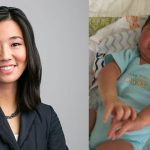

 My children growing up in Massachusetts | Photo by Cristina Eduardo
I was born to a 20-year-old mom and a 21-year-old dad during the summer of 1990 in Caracas, Venezuela. Both were beginning their studies to become physicians, with no money saved.
They grew up in Catholic working-class families, the marriage didn’t work, and the divorce came when I was less than one year old.
I grew up watching the women of my family -my grandmothers, my mom, my aunts, and my cousins- struggle, learn, overcome obstacles, grow, and make mistakes. I learned from a very young age that every action has consequences, and you will always pay for your mistakes.
In 2014, the political, social, and economic deterioration of Venezuela led me to make one of the most challenging decisions of my life: leave everything and migrate to Massachusetts with my husband and our one-year-old son.
As you may imagine, things are not easy for immigrants anywhere. There aren’t enough words to tell how hard it was to leave our home, our family, our friends… And on top of that, we found out I was expecting, and we became homeless six months into the pregnancy.
The struggle was real.
Despite the severity of our circumstances, some people gave us a hand. A friend of a friend, members of our parish, even strangers; but none of that would have been enough if we didn’t have faith in God and us.
Those moments of distress and difficulties showed me some of the hardships of living as an immigrant and as a low-income family, including being seen by some as incapable of providing a future for our American daughter. Because yes, abortion was suggested.
It made me wonder why my economic status dictated the future of my daughter. Why, for some, my daughter was not worthy of the chance to live? Why having an abortion with my circumstances could be seen as mercy?
But my situation also allowed me to imagine other women who are struggling as much or worse than I did. And I thought about what I had at that moment that others may not: a husband, emotional support, information, healthcare, and hope. It opened my eyes to the reality that women around the country facing unplanned pregnancies need help and comfort; they need to hear and know that they’re not alone. Choosing life for their babies is going to be one of the most critical and selfless decisions they’re going to make, probably ever.
They need to receive all the information about how the procedures are. How the embryos and fetuses are extracted from their bodies, they need to see how those “things” look. They need to know how adoption works. The statistics of adopted newborns in the country. All of that… But principally, they need time to think about it; they need someone to talk to. They need to receive all the information and then wait a little longer. If they’re underage, they need to be encouraged to speak to their parents.
They need to know stories of other mothers in similar situations who chose life and managed to overcome the obstacles. Of those who regret their abortions and are still mourning their children.
In a moment of misinformation, with so many things we’re not sure about, and so many definitions that are missing, I want my story to work as a testimony of hope to help you overcome the fear that comes with being pregnant, not only in an ideal situation -married and economically stable- but also, in the most challenging conditions. I want you to know my experience, to know that regardless of your race, ethnicity, or economic status, if you live in America and work hard, you’re going to thrive and become who you want to be.
I want you to know that there are resources this state (Massachusetts) provides that are helpful to you and your baby. I want you to know that you’re going to find people who would love to give you a hand as they did to us.
And I know there are more stories like mine and of others who experienced harder situations. I hope more women start sharing their stories about choosing life for their children. Stories about adoption, of those who decided to give a chance to the innocent life growing inside them despite being raped, about babies with terrible conditions in the womb that made it; even about those who were diagnosed to die days or weeks after birth and got to feel the skin of their parents and the love of everyone around them before they were gone.
I wish we heard more stories about selflessness and life, because the women who feel depressed and alone need them, if there is any female support we can give to them is to prove with our actions and testimony that they can make it just as much as anyone else. Those who choose abortion and regret it, need to know that there are resources to help them. That it is OK to regret it and think differently after. That both the mother and the child are worthy of a future.
There is no future without hope; there is no hope without the children.
By Cristina Eduardo