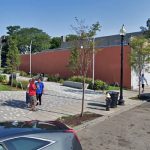

 Front of Restaurante Cesaria located at 266 Bowdoin Street in Dorchester | Photo by Danielle Buote
By Danielle Buote
Moving from tropical Cape Verde to Massachusetts during the Blizzard of ‘78 was a shock for then 8-year-old Tony Barros. One of the youngest of 12 siblings, Barros was part of one of the last groups of his family that migrated in search of, as he says, “a better life, education, and work.”
Now 40 years later, Barros co-owns one of Boston’s most popular Cape Verdean eateries and music venues, Restaurante Cesaria, bringing his family’s culture to the public sphere.
Before opening Cesaria in 2002 with current co-owner Jose Fonseca-Brandao and two previous partners, Barros says that he was more so looking for a music and entertainment venue.
“When the search for a space first began, our idea wasn’t really to go into the restaurant business yet. I was always involved in music and was focused on that but had the dream of creating a place where you can have dinner and watch a show or dance, I just didn’t think I was ready and wasn’t even looking yet.”
The co-owner explains, “When we ran into this location that was already equipped with the kitchen, we were aware that there was nothing in the area that showcased our music, our cuisine. There was a need for that and a space to show the talent in our community, bands that you would only see if there was a private event or a big festival but nothing really weekly or continuous. We wanted a place where you can get the total package of what our country, our culture has to offer.”
 Tony Barros, co-owner of Restaurante Cesaria in front of a portrait of Cesaria Evora, the inspiration for the eatery’s name | Photo by Danielle Buote
For those familiar with Cape Verdean culture, perhaps the restaurant’s name is self-explanatory. “I always had the idea of naming whatever venue I opened ‘Cesaria’”, referring to morna and coladeira musician Cesaria Evora, Barros says, “because she was so well known in the world’s music industry and represented our country, putting us on the map when it came to culture and music. I figured having a place named after her, you don’t really have to say that it’s Cape Verdean.”
After finding the venue, Barros and his partners took about one year to create the menu, build a staff, and in 2002, Cesaria’s doors opened on Dorchester’s Bowdoin Street.
A unique cultural experience
Cesaria offers dishes unique to Cape Verde, such as Katchupa, a stewed hominy that remains one of the most popular choices. “Different islands, and even different people cook it differently,” Barros says. “Folks do it with pork, meat, beans, collard greens, sweet potatoes, cabbage, carrots; it’s a stew of all types of ingredients. It takes hours to cook but is always available here.” Barros explains that people usually refry the Katchupa and have it for breakfast, Katchupa Refugada, featured on the menu as well and is usually served with eggs and linguica.
 Polvo Grelhado, grilled octopus dish recommended by Barros | Photo by Danielle Buote
Corn, whole fish, and different types of meat, such as stewed goat, are Cape Verde staples which Barros says “has a lot of Portuguese influence since we used to be a Portuguese colony.”
“I find myself eating the octopus more than anything,” says Barros. “I would recommend it because it’s a very unique dish that we cook our own way. We top it with our house olive oil, peppers, onions, olives, and parsley. We’ve been able to get octopus from Portugal and Spain that’s really tender, much better quality than from when we first opened. Some people might be nervous to try octopus but once they taste it, they usually are pleased.”
Barros comments that the octopus at Cesaria is a lot cheaper than most restaurants. “That’s been some of the challenges, trying to keep the place going with affordable items because we aren’t in the downtown area but we serve food that’s just as good in quality.”
While Cesaria is primarily known for its Cape Verdean food, pasta dishes can be found in what Barros calls the restaurant’s “international menu.”
The restaurant also has a bar that includes cocktails named after Cape Verdean people and places as well as drinks specific to Cape Verde. “We have a ponche martini which is well known. We also have grogue, a Cape Verdean rum, and a wine that come directly from the island.”
 Culturally-inspired artwork lines the walls at Cesaria, including several of Barros’ own paintings, a rotating art installation and, seen here, portraits of influential black men and women | Photo by Danielle Buote
Cesaria is also known for their daily buffet, Monday through Saturday which often offers different dishes every day. The buffet typically includes a meat, a fish, a few other items, as well as fruit, salad, and comes out to only $10.
At Cesaria, the integration of food and entertainment produces a unique cultural space. Live music can be found on Fridays, Saturdays, Sundays during brunch, and Sunday night as well as Thursday nights hosted by a DJ, often bringing in a younger crowd. Barros’s musical roots connected him with “artists, producers, and promoters, so whenever there’s any big name artists in town we try to do a show here so the community can have a closer, intimate feeling performance. Concert ticket prices always include a dinner buffet and after most shows, people dance and mingle so we get a little bit of everything.”